
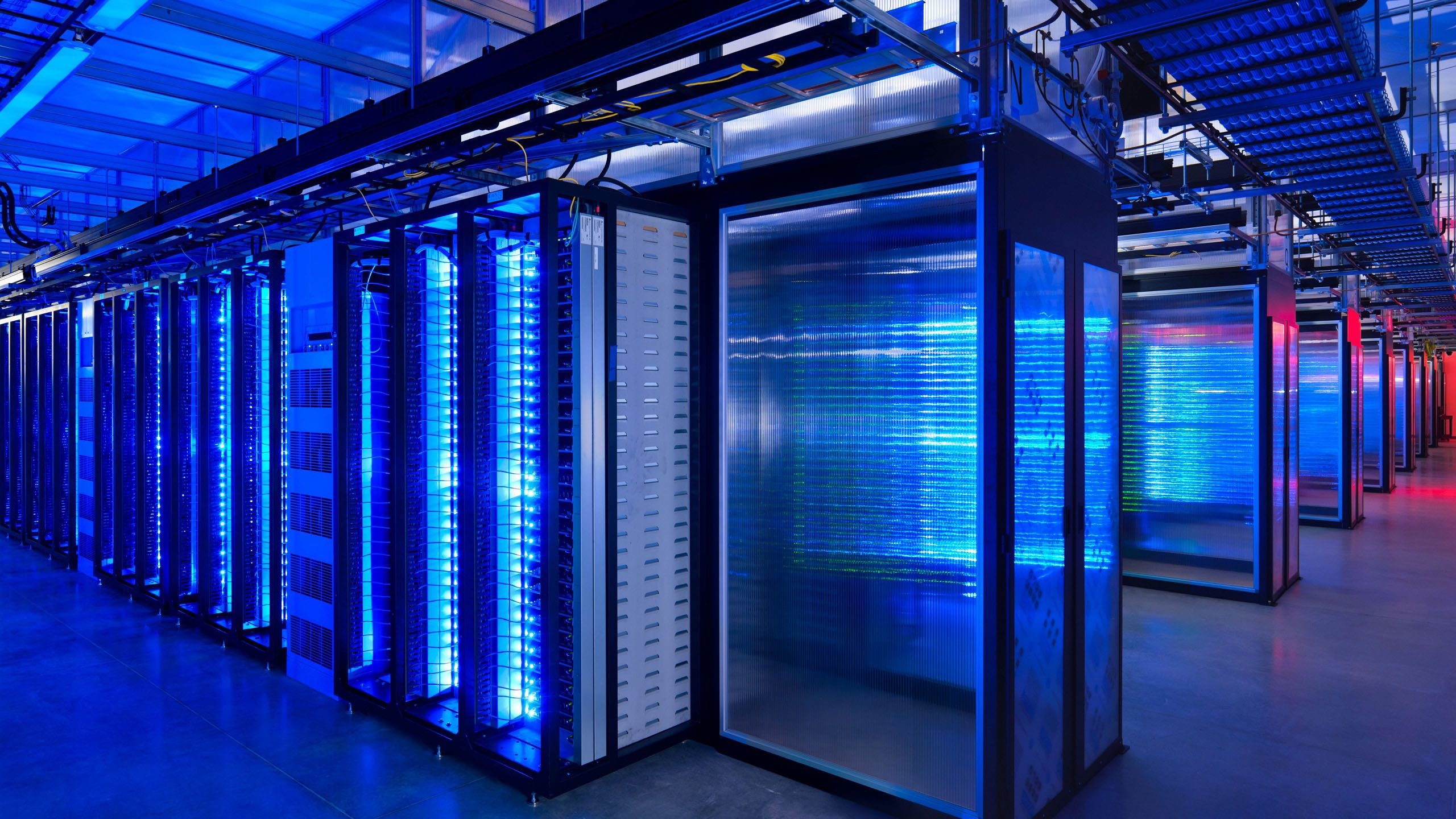
Title Idea(s): AI’s electric appetite.
More Developed Proposal:
There is currently a large research gap in the understanding of environmental impacts of AI data centers. Due to the fast growing nature of the field, the hyper monetization of the “AI bubble”, and a lack of governmental oversight, the implementation of AI data centers has become the new “wild west gold rush” of the 21st century.
When private corporations take from public resource pools, the usage reports must be publicly available. Different organizations have attempted to calculate the energy demand and carbon foot print of AI data centers, but heavily rely on questionably validated proprietary analyst data (1). Data centers are nothing new and have existed for as long as computers have run. But the seemingly exponential growth in numbers and size of data centers have lead to seemingly exponential impacts on the environment. The International Energy Agency (IEA) and other research estimates AI operating systems account for 15% – 20% of total data center electricity demand (1) and could consume 3% – 4% of total global electricity (2). It is argued that in 2022, data centers alone ranked 11th for electrical consumption compared to countries (8) and by the end of this year, 2026, data centers could move to 5th place between the electrical usage of the entire country of Japan and Russia. “Just because this is called ‘cloud computing’ doesn’t mean the hardware lives in the cloud… they have direct and indirect implications for biodiversity” [Bashir] (8).
The electrical demand increases have drastic outcomes on local communities and the environment due to the highly localized nature of electrical distribution. While the global electrical consumption is less that 5%, when localized down to a total country, the consumption percentages can increase to 21% in Ireland or even further localized to city, it is estimated that nearly 80% of Dublin’s electrical grid is used by data centers (4).
It is imperative that governments require transparent disclosure of public electrical usage of private corporations as well as promote environmentally conscious regulation for the construction and operation of data centers.
Current Citations:
(1) De Vries-Gao, Alex. “The carbon and water footprints of data centers and what this could mean for artificial intelligence.” Patterns, vol. 7, no. 1, 9 Jan. 2026, https://doi.org/10.1016/j.patter.2025.101430.
(2) Directorate-General for Environment. “AI Data Centre Waste Heat Could Be Used for Water Purification and Carbon Capture.” Edited by The Science Communication Unit, Environment, The University of the West of England, Bristol, 30 Mar. 2026, environment.ec.europa.eu/news/ai-data-centre-waste-heat-could-be-used-water-purification-and-carbon-capture-2026-03-30_en.
(3) Ebert, Kai, et al. “AI, climate, and regulation: From data centers to the AI Act.” Computer Law & Security Review, vol. 61, July 2026, https://doi.org/10.2139/ssrn.4980340.
(4) Gröger, Jens, et al. “Environmental Impacts of Artificial Intelligence.” Greenpeace, Öko-Institut Consult GmbH, May 2025, www.greenpeace.de/publikationen/20250514-greenpeace-studie-umweltauswirkungen-ki.pdf.
(5) Marinoni, Andrea, et al. “The data heat island effect: quantifying the impact of AI data centers in a warming world.” arXiv, 21 Mar. 2026, https://doi.org/https://doi.org/10.48550/arXiv.2603.20897.
(6) Tsougka, Anastasia, and Zuzanna Warso. “From Innovation to Overshoot: How Data Centre Expansion Risks Derailing Climate Goals.” Edited by Alison Grace, Ecostandard, Environmental Coalition on Standards (ECOS) and Open Future, Sept. 2025, ecostandard.org/wp-content/uploads/2025/09/Data-centres-report.pdf.
(7) Xiao, Tianqi, et al. “Environmental impact and net-zero pathways for Sustainable Artificial Intelligence Servers in the USA.” Nature Sustainability, vol. 8, no. 12, 10 Nov. 2025, pp. 1541–1553, https://doi.org/10.1038/s41893-025-01681-y.
(8) Zewe, Adam. “Explained: Generative AI’s Environmental Impact.” MIT News | Massachusetts Institute of Technology, MIT News, 17 Jan. 2025, news.mit.edu/2025/explained-generative-ai-environmental-impact-0117.