
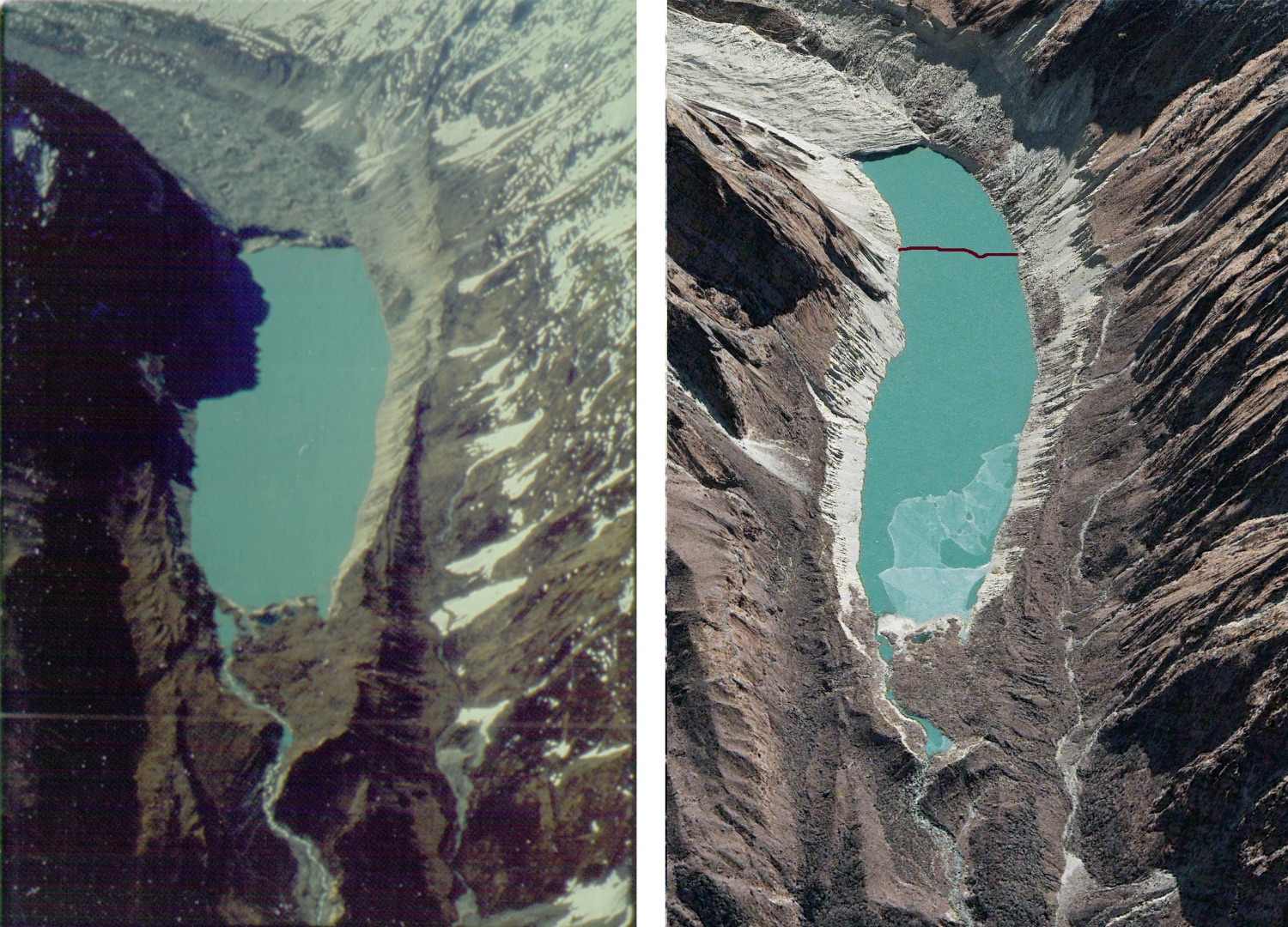
Climate change is intensifying flood and Glacial Lake Outburst Flood (GLOF) risks in Nepal, where over 47 glacial lakes are now classified as potentially dangerous (Ratna Bajracharya et al., 2020). Conventional, top-down Early Warning Systems (EWS) rely on dense hydro-meteorological station networks and real-time data; infrastructure that Nepal largely lacks due to limited technical and financial resources (Bajracharya et al., 2021). This makes centralized warning systems structurally ill-suited to the country’s remote, flood-prone communities. Research further shows that excluding vulnerable communities from EWS design and decision-making is the primary driver of system failure globally (Samansiri et al., 2023). Together, these dynamics create a clear gap: how can we design EWS that are both technically feasible and genuinely effective for the communities most at risk?
This poster asks: Does active community engagement in EWS, from monitoring to warning dissemination, improve their effectiveness and sustainability for flood and GLOF risk in Nepal? I hypothesize that community-based EWS outperform top-down, government-led systems in last-mile warning delivery and long-term sustainability, because communities provide continuous local monitoring capacity that centralized agencies cannot maintain (Smith et al., 2017).
CB-EWS are integrated, low-cost, people-centred systems managed by and for communities, providing real-time flood warnings through networks of local actors and government bodies. Their key strength lies in active community involvement from design through to monitoring and management; a bottom-up approach that is simple, low-tech, and easy to maintain in resource-limited contexts. To examine their effectiveness, I will conduct a systematic literature review of CB-EWS in Nepal, focusing on documented outcomes, lead times, fatalities avoided, and system sustainability across riverine flood and GLOF contexts, drawing on a range of case studies.
The findings of this review are expected to confirm that CB-EWS, when communities are meaningfully engaged, are more effective and sustainable than centralized alternatives in resource-limited, high-risk settings. Beyond Nepal, this has broader implications for climate adaptation in the Global South, where similar infrastructure gaps and institutional challenges exist. Critically, this poster will argue that improving CB-EWS is not only a matter of better technology, it also requires better governance, sustained community participation, and institutional support that outlasts donor funding cycles. For the CLICCS/SICSS community, this case illustrates a wider lesson: researching and shaping climate futures demands that we look beyond natural dynamics and engage seriously with the societal structures that determine who receives a warning, who acts on it, and who is left behind.
References
Bajracharya, S. R., Khanal, N. R., Nepal, P., Rai, S. K., Ghimire, P. K., & Pradhan, N. S. (2021). Community Assessment of Flood Risks and Early Warning System in Ratu Watershed, Koshi Basin, Nepal. Sustainability, 13(6), 3577. https://doi.org/10.3390/su13063577
Ratna Bajracharya, S., Bikash Maharjan, S., Shrestha, F., Chogyal Sherpa, T., Wagle, N., & Bhakta Shrestha, A. (2020). Inventory of glacial lakes and identification of potentially dangerous glacial lakes in the Koshi, Gandaki, and Karnali river basins of Nepal, the Tibet Autonomous Region of China, and India. https://doi.org/10.53055/icimod.773
Samansiri, S., Fernando, T., & Ingirige, B. (2023). Critical Failure Factors of Flood Early Warning and Response Systems (FEWRS): A Structured Literature Review and Interpretive Structural Modelling (ISM) Analysis. Geosciences, 13(5), 137. https://doi.org/10.3390/geosciences13050137
Smith, P. J., Brown, S., & Dugar, S. (2017). Community-based early warning systems for flood risk mitigation in Nepal. Natural Hazards and Earth System Sciences, 17(3), 423–437. https://doi.org/10.5194/nhess-17-423-2017
Other related literature
Ahmed, R. (2025). From vulnerability to resilience: community-based approaches in glacial lake outburst flood (GLOF) risk mitigation. Discover Sustainability, 6(1). https://doi.org/10.1007/s43621-025-00967-7
Gautam, D. K., & Phaiju, A. G. (2013). Community Based Approach to Flood Early Warning in West Rapti River Basin of Nepal. Journal of Integrated Disaster Risk Management, 3(1), 155–169. https://doi.org/10.5595/idrim.2013.0060
Hermans, T. D. G., Šakić Trogrlić, R., van den Homberg, M. J. C., Bailon, H., Sarku, R., & Mosurska, A. (2022). Exploring the integration of local and scientific knowledge in early warning systems for disaster risk reduction: a review. Natural Hazards, 114(2), 1125–1152. https://doi.org/10.1007/s11069-022-05468-8
Khadgi, V. R., Bhattarai, A., Shakya, S., & Pradhan, N. S. (2022). Enhancing the sustainability of community-based flood early warning systems.
Rai, R. K., van den Homberg, M. J. C., Ghimire, G. P., & McQuistan, C. (2020). Cost-benefit analysis of flood early warning system in the Karnali River Basin of Nepal. International Journal of Disaster Risk Reduction, 47, 101534. https://doi.org/10.1016/j.ijdrr.2020.101534
Shrestha, A., McCrone, A., Josias Láng-Ritter, Gautam, S., & Varis, O. (2025). Bridging gaps, saving lives: Integrating communities’ voices and impact mapping into flood early warning systems in rural Nepal. International Journal of Disaster Risk Reduction, 118(9), 105238. https://doi.org/10.1016/j.ijdrr.2025.105238